




UNESCO Heritage
Banská Štiavnica, inscribed on the UNESCO World Heritage List, is one of Slovakia’s jewels – a place where a rich history meets remarkable architecture and technical monuments.
The town is known for its historic buildings, such as the Old Castle, originally a Romanesque church rebuilt as a fortress, and the New Castle, a renaissance Watchtower, both of which dominate the town’s skyline. St Catherine’s Church, also known as ‘the Slovak Church’, is another important monument that reflects the spiritual life of the townspeople.
A unique feature of the region is the tajchy – man-made water reservoirs built in the 18th century to supply water to the mines. There were originally 60 of them; 24 survive today and are used for recreation, making them popular places for swimming and relaxing. The Calvary, a Baroque gem built on Scharffenberg Hill, is another of the town’s landmarks. This complex of 23 separate buildings offers visitors not only a spiritual experience but also wonderful views of the surrounding countryside. A stroll through the town’s narrow lanes reveals a wealth of burgher houses, churches and other historic buildings that together create a truly unique atmosphere. Every corner of Banská Štiavnica tells its own story, just waiting to be discovered.

This tajch (a historic mining reservoir), probably the most picturesque of those that survive, was built in 1743 to a design by Samuel Mikovíni, who was […]

The most beautifully coloured tajch (a historic mining reservoir) is without doubt Veľká Vodárenská, with its stunning azure water. In summer it is a place for […]

Veľká and Malá Richňava were originally a single tajch (a historic mining reservoir), built for the needs of mining. Because the dam was not watertight, the […]

The mountain bike routes in the Štiavnica Mountains are an ideal way to experience the area first-hand. They are divided into 4 main areas – Hodruša, […]
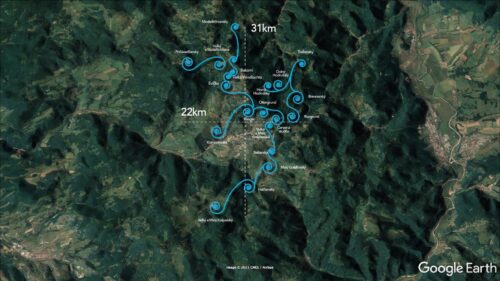
The mining water management system, now inscribed on the UNESCO World Heritage List, was the world’s biggest water engine until the Panama Canal opened (15 August […]