








Enjoy an unforgettable summer in the picturesque setting of Banská Štiavnica, where a rich history meets breathtaking nature.
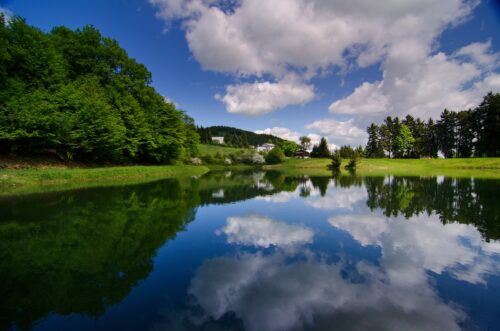
Hiking trails lead through dense forests and past the remarkable tajchs (historic mining reservoirs), revealing the beauty of the region at every step. Cycle routes of varying difficulty are just as popular, from leisurely rides to thrilling mountain descents.
In every corner of Štiavnica you’ll discover a unique atmosphere that draws you into the past while captivating you with its lively energy. This summer is your chance to combine adventure with relaxation, enjoy unspoilt nature and collect new experiences that will stay with you for a long time. Get inspired and discover everything this enchanting region has to offer!
The Štiavnica Mountains are home to as many as 5 remnants of original primeval forest. The best known are the forests around Bálov grúň, which lie […]
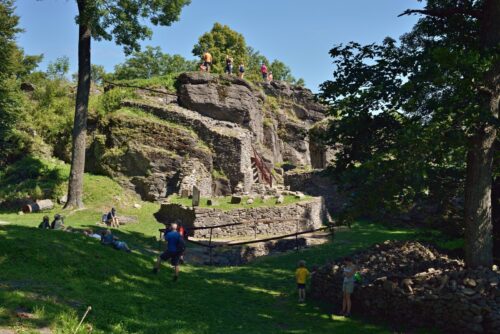
The ruins of Sitno Castle stand on the andesite crags of Sitno Hill, which gave the castle its name. Sitno was once a mighty medieval stone […]
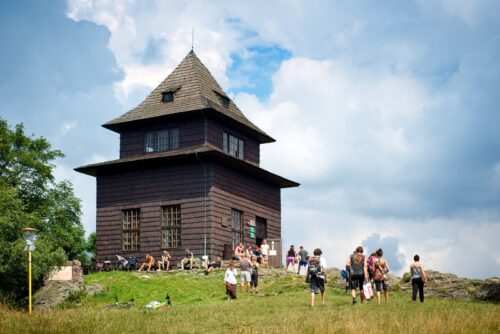
The Lookout Tower on the summit of Sitno is a wooden structure with a square ground plan and a pyramid roof, and it is one of […]
Ranč Bôra in the village of Podhorie offers hiking with a difference – on horseback. Choose from half-day and full-day treks, or a tasting of home-made […]
The route starts on Holy Trinity Square and ends in the centre of Banská Štiavnica. It has a longer and a shorter variant, both marked with […]
From the centre of Banská Štiavnica, across the Kysihýbel Aqueduct and through the village of Kozelník all the way to Hronská Breznica, the route runs through […]
A magical place on top of Rosniarky hill, with beautiful panoramic views of the iconic Banská Štiavnica Calvary. Five stone blocks stand in a large meadow, […]
The Stone Sea is a natural phenomenon formed from the prehistoric lava of a stratovolcano: a 13-ha area evenly strewn with huge, bluish boulders. They were […]
Tajch Bakomi, a tajch (a historic mining reservoir), was built between 1735 and 1737. According to Baron Ján Nepomuk Mitrovský, it was needed to make better […]
Manage cookies
To provide the best experience, we use technologies such as cookies to store and/or access device details. Consenting to these technologies will allow us to process data such as browsing behaviour or unique IDs on this site. Not consenting or withdrawing consent may adversely affect certain features and functions.
Cookies are small text files that websites can use to make the user’s experience more efficient.
The law states that we can store cookies on your device if they are strictly necessary for the operation of this site. For all other types of cookies we need your consent. This means that cookies categorised as necessary are processed on the basis of Art. 6(1)(f) GDPR. All other cookies, i.e. those in the preferences and marketing categories, are processed under Art. 6(1)(a) GDPR.
This site uses different types of cookies. Some cookies are placed by third-party services that appear on our pages.
You can change or withdraw your consent at any time from the Cookie Policy on our website.
Our Privacy Policy explains who we are, how you can contact us and how we process personal data.
When contacting us about your consent, please quote your consent ID and the date.