




Culture & Arts
Banská Štiavnica is a town where history meets a rich cultural and artistic scene.
Its lanes breathe history, yet pulse with contemporary life. The town has plenty of museums and galleries that bring its rich history and art closer to visitors – from the Open-air Mining Museum, where you can experience the authentic atmosphere of mining life, to modern galleries showcasing contemporary art. Throughout the year, Banská Štiavnica hosts numerous festivals celebrating music, theatre, literature and film.
The historic town centre is inscribed on the UNESCO World Heritage List and is home to many monuments, such as the Old Castle and the New Castle, St Catherine’s Church and the Calvary. Each of these buildings tells its own story and adds to the town’s unique atmosphere. If you’re looking for interactive experiences, there are exhibitions such as the Bank of Love, where you can discover the longest love poem in the world, or the Glanzenberg Hereditary Adit, which takes you underground right beneath the town. Banská Štiavnica is a place where everyone finds something to enjoy – whether you are a history or art lover, or just looking for new experiences.

This Roman Catholic church, a single-nave Baroque and Classicist building with a presbytery, is the oldest monument in the village. Of particular interest are the three […]
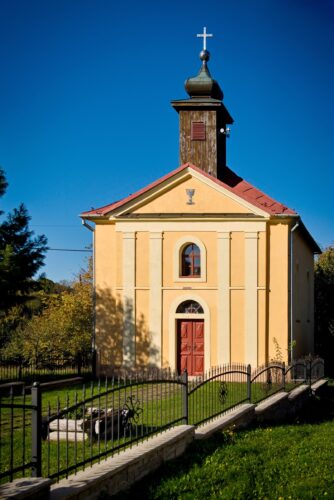
The Evangelical church stands in the middle of the mining settlement. It acquired its Classicist appearance in 1858, as the date on the altar shows, although […]

This Classicist building with a sacristy dates from 1804 and was financed by the mining company of the Moder mine. The church has been restored several […]
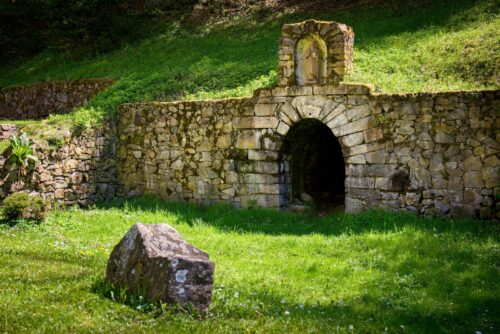
From the 18th century, the Schöpfer mine was one of the most important mines in the Hodruša valley. One of the earliest records of the Schöpfer […]
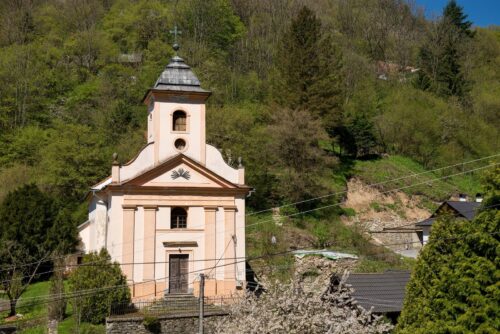
This single-nave Classicist church with a sacristy stands just below the Catholic parish church of St Nicholas in the centre of Banská Hodruša. You can also […]
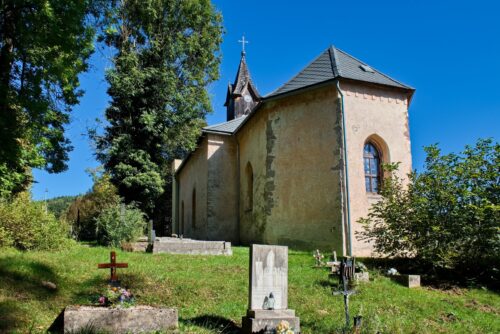
This late Gothic cemetery church was built in 1575–1577, away from the village centre. It was probably built by Evangelical (Lutheran) worshippers, but over the centuries […]
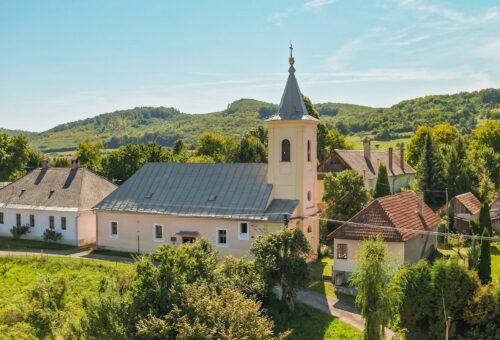
The Evangelical church was built in 1785. Under the regulations in force at the time it was not allowed a tower and had to be squeezed […]
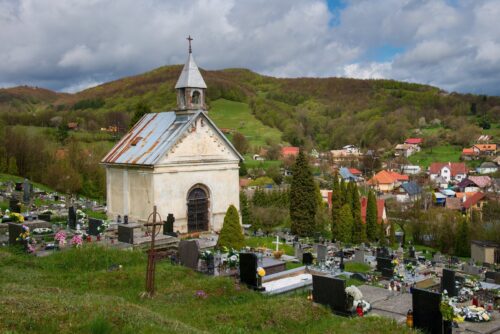
The Chapel of St Elizabeth stands in the local cemetery above the village. It was built on the initiative of the then parish priest, Anton Oldinger, […]

One of the most beautiful Baroque Calvaries in Europe stands on a cone-shaped hill right at the heart of the crater of the Štiavnica stratovolcano, and […]