




Culture & Arts
Banská Štiavnica is a town where history meets a rich cultural and artistic scene.
Its lanes breathe history, yet pulse with contemporary life. The town has plenty of museums and galleries that bring its rich history and art closer to visitors – from the Open-air Mining Museum, where you can experience the authentic atmosphere of mining life, to modern galleries showcasing contemporary art. Throughout the year, Banská Štiavnica hosts numerous festivals celebrating music, theatre, literature and film.
The historic town centre is inscribed on the UNESCO World Heritage List and is home to many monuments, such as the Old Castle and the New Castle, St Catherine’s Church and the Calvary. Each of these buildings tells its own story and adds to the town’s unique atmosphere. If you’re looking for interactive experiences, there are exhibitions such as the Bank of Love, where you can discover the longest love poem in the world, or the Glanzenberg Hereditary Adit, which takes you underground right beneath the town. Banská Štiavnica is a place where everyone finds something to enjoy – whether you are a history or art lover, or just looking for new experiences.
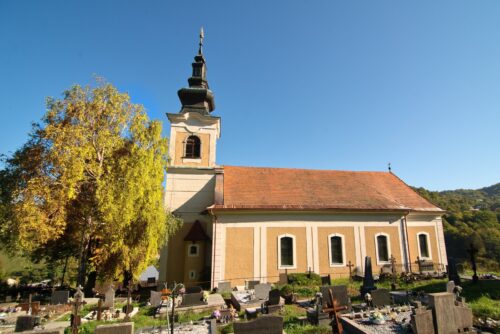
The original church, probably made of wood and mentioned in 1584, stood at a place called Hrobíky. The new Roman Catholic church was built in 1776 […]
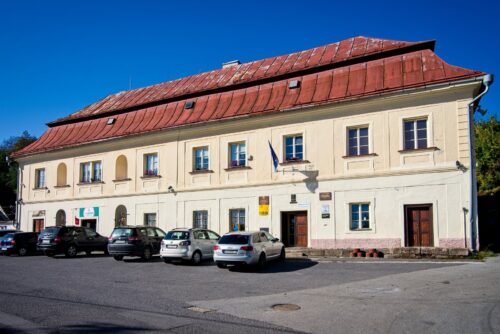
The Chamber Vice-Count’s Office is part of the conservation area of technical monuments. This two-storey Baroque block stands in the middle of the village. It was […]

This is one of the village’s old historic buildings, in which a miners’ hospital was set up. It was founded in 1648. It served as an […]
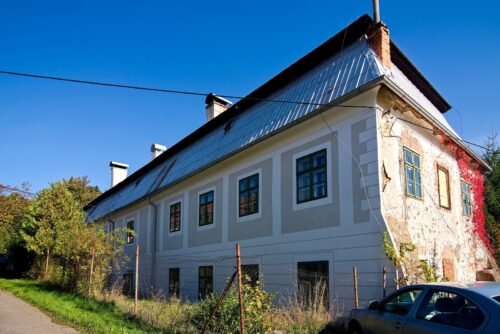
This building in the middle of the village, below the road, was built in the Baroque style in the second half of the 18th century on […]

In the mid-18th century, monks of the Hieronymite order built a monastery complex with St Joseph’s Church, with the help of the state mining treasury and […]
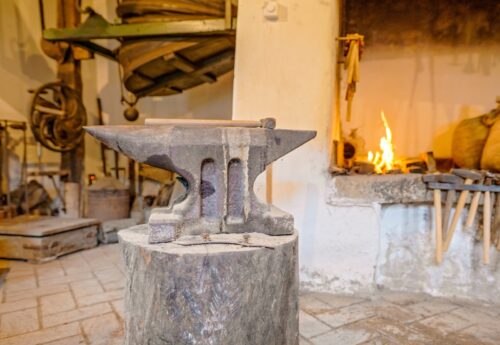
Frozen in time, picturesque and beautiful – that is the blacksmith’s forge that local people walked past without a second glance for decades. It was the […]
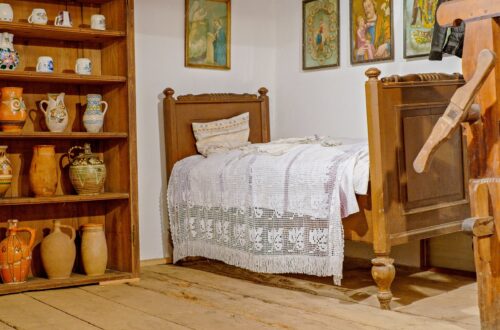
The memorial room documents the life and work of Andrej Kmeť (1878–1905), a notable local Roman Catholic priest, polymath, palaeontologist, archaeologist, historian, ethnographer and botanist. It […]

The Evangelical church was built in 1900 in the Neo-Gothic style. Construction began in April 1899, and the church was completed and consecrated in October of […]
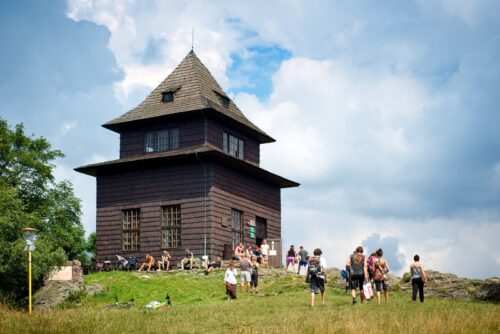
The Lookout Tower on the summit of Sitno is a wooden structure with a square ground plan and a pyramid roof, and it is one of […]