




Prenčov
The valley of the Štiavnica stream, in the countryside below Sitno, was already inhabited in the Bronze Age. Prenčov is less than 20 minutes’ drive from Banská Štiavnica.
The oldest written mention of the medieval settlement of Princh dates from 1266. The village first belonged to the Hunt-Poznan family, an Old Slavonic clan that rose to power as early as the reign of King Svätopluk; from the 16th century it belonged to the Sitno estate, from 1629 to the Koháry family and later to the Coburgs. In 1773 the village was called Prenčow.
Most people worked as farmers, carters, potters, butchers, blacksmiths and forestry workers. Clay from the local clay pits was taken to nearby Banská Štiavnica, where it was made into the famous ‘zacharky’ pipes, exported all over the world. In the late 19th century bobbin lace-making also flourished, as did the production of pottery with scratched folk-motif decoration and inscriptions in verse.
Today Prenčov is a lively village with thriving agriculture and fruit growing, well-preserved folk architecture and living folklore. Local people make wooden troughs and gingerbread, and keep bees and cattle. When you visit, look out for the richly carved wooden gables on the house roofs. Since time immemorial, gables and window frames have been decorated with religious and ornamental motifs such as the cross, the heart and the tree. These have become a village tradition, and even recently renovated houses have them carved into their gables.
Milling had a tradition in the village going back to the 14th century, and had private trades not been banned in 1950, flour might still be ground here today. The village had three mills powered by water from springs in the fields, and each mill had a dam to build up a store of water. One roller mill has survived to this day but, sadly, is not open to the public. On the road between Prenčov and Svätý Anton you will come across the Samaritánka chapel with its spring, whose water many believe has healing powers. Look across the road and you will spot the Mesiac kameň (‘Moon Stone’) rock.
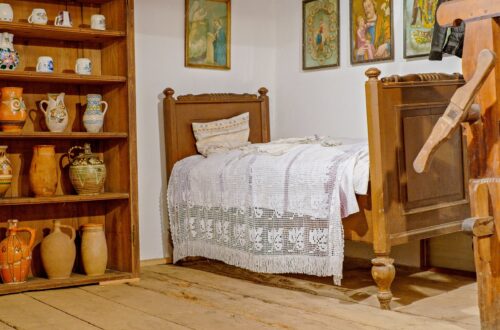
The memorial room documents the life and work of Andrej Kmeť (1878–1905), a notable local Roman Catholic priest, polymath, palaeontologist, archaeologist, historian, ethnographer and botanist. It […]
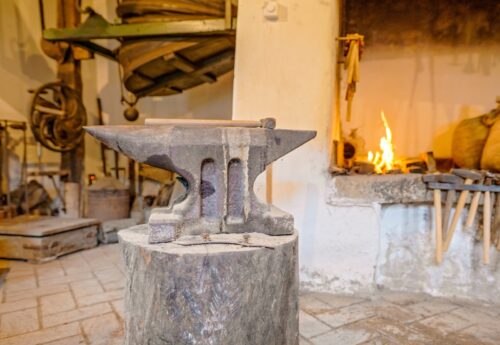
Frozen in time, picturesque and beautiful – that is the blacksmith’s forge that local people walked past without a second glance for decades. It was the […]

Just a 15-minute drive from Banská Štiavnica, this little village boasts something unique: carved gable ends on its houses. The tradition began here long ago, with […]

The Evangelical church was built in 1900 in the Neo-Gothic style. Construction began in April 1899, and the church was completed and consecrated in October of […]

Each year this summer festival of folklore, folk customs and traditions has a different theme. Old crafts come back to life, and the air is filled […]
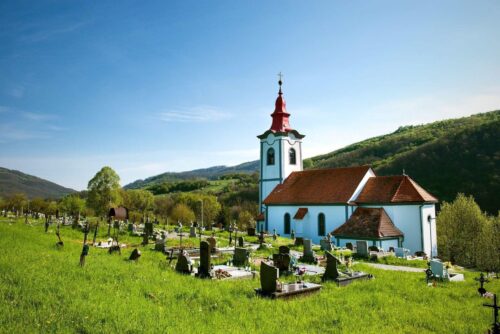
The Roman Catholic Church of St Nicholas is a single-nave Baroque building. Its most interesting and valuable feature is the Baroque altar, with a painting of […]

He was already making things out of wood at the age of 6, and he has stayed true to woodworking ever since. Today, in the village […]

Wooden troughs have been made in his family for 4 generations. That the young woodcarver Marek Kanaloš is truly skilled is borne out by the fact […]