




Kozelník
A picturesque little village in the narrow valley of the Jasenica stream, along which runs the popular Štiavnická Anča cycle route.
Kozelník lies at an altitude of 390 m above sea level and has around 174 permanent residents. The roots of settlement here go back to the 15th century – the oldest charter, issued by King Sigismund of Luxembourg, mentions the settlement under the name Poruba. Because iron ore was processed in the local hammer mill, it was later called Železník, and since 1553 it has permanently borne the name Kozelník.
The always used to be a strategic transport hub. In the 18th century the imperial and royal postal and trade route Magna Via (the Great Road) passed this way, and right in the village there was a stagecoach and coaching station (horse-changing station), where carters rested and changed horses before the steep climb up to Banská Štiavnica.
Today the Štiavnická Anča cycle route passes through the village. It follows the track bed of the first narrow-gauge steam railway in the Kingdom of Hungary, dating from 1873, and so runs mostly on the flat alongside the Jasenica stream. A shelter awaits cyclists in the village. The route is still under construction – after rain, expect some sections to be difficult to pass.
The village’s landmark is a restored 19th-century bell tower, and its architectural gem is a modern ship-shaped chapel. Above the valley runs the Trať mládeže (Youth Railway), built in 1948–1949 by more than 47,000 young volunteer workers.
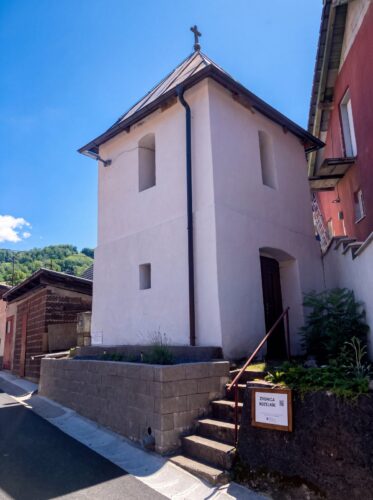
The village’s most striking landmark is its historic 19th-century bell tower, built of timber and masonry. This national cultural monument has undergone a complete restoration, saving […]
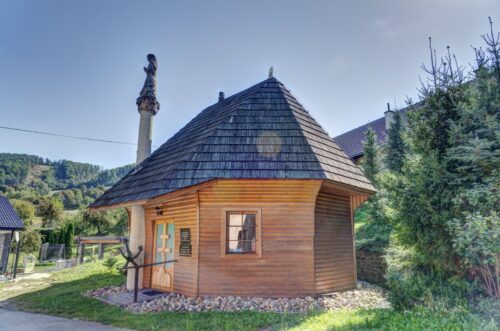
The architectural gem of the village of Kozelník is the modern Roman Catholic Chapel of the Sacred Heart of Jesus, built in 2006. It is uniquely […]
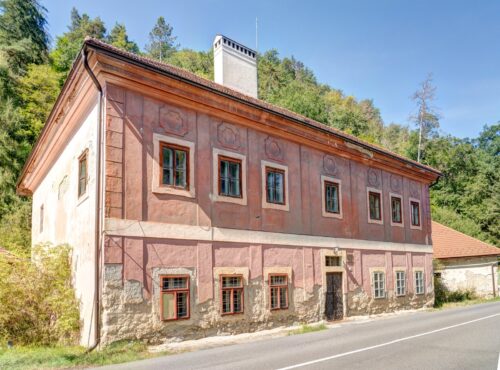
In the 18th century, the famous imperial and royal post and trade route Magna Via (the Great Road) passed through Kozelník. Right in the village stood […]

From the centre of Banská Štiavnica, across the Kysihýbel Aqueduct and through the village of Kozelník all the way to Hronská Breznica, the route runs through […]
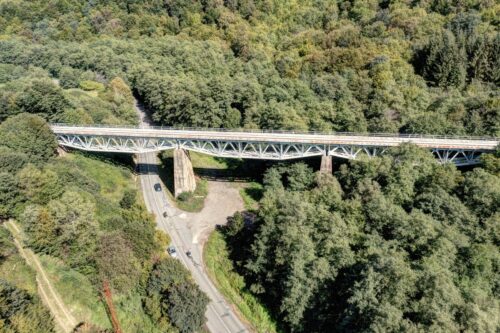
The wealthy mining town of Banská Štiavnica needed a reliable link to the main railway network in the Hron valley. In 1873 a narrow-gauge line from […]