




Beluj
With almost 140 inhabitants, Beluj is one of the smallest villages in the region. Thanks to its well-preserved folk architecture and respect for tradition, it has been awarded the title Dedina ako klenotnica (‘Village as a Treasure Chest’).
The first written mention of the village dates from 1290, but Andrej Kmeť’s archaeological research proved that the area was already settled in prehistoric times. Notable figures who served here as Lutheran pastors include Ján Holuby and Gustáv Štollman, who also assisted with A. Kmeť’s research.
The village has always been known for its pottery. A. Kmeť states that this is even reflected in its name, which he derived from the word ‘biela’ (white) after the white clay found in the Beluj area. The oldest written record of potters in Beluj dates from 1635. Beluj earthenware – decorative jugs, bottles and plates – was known for its high-quality, often very thin body and its typical Beluj decoration. The last potter’s wheel stopped turning in 1889, when the last working potter died. Today you can learn about the pottery tradition at the ‘Beluja’ museum in the centre of the village, where they will also show you a short documentary, and you can try your hand at the potter’s craft in the workshop here (opening hours at www.beluja.sk).
The village is also home to the Roman Catholic St Lawrence’s Church, whose foundations date back to the Romanesque period. Its archaically shaped window openings show that it is one of the oldest churches in the region. It was rebuilt twice in the Baroque period, has looked as it does today since 1871 and is listed as a national cultural monument.
Beluj is less than 20 minutes’ drive from Banská Štiavnica and is well worth a trip. Its picturesque rolling hills make for easy hiking and reward you with beautiful views over the countryside.

The village of Beluj has turned an old barn into a folk heritage room that shows you how people lived and worked in the village in […]
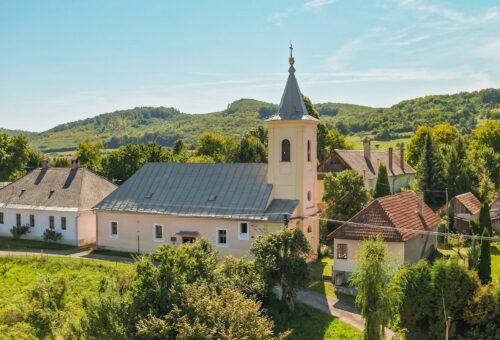
The Evangelical church was built in 1785. Under the regulations in force at the time it was not allowed a tower and had to be squeezed […]

This one-day event is for lovers of good food, culture and fun. It always takes place at the end of September. Look forward to a fruit […]

Each year this summer festival of folklore, folk customs and traditions has a different theme. Old crafts come back to life, and the air is filled […]