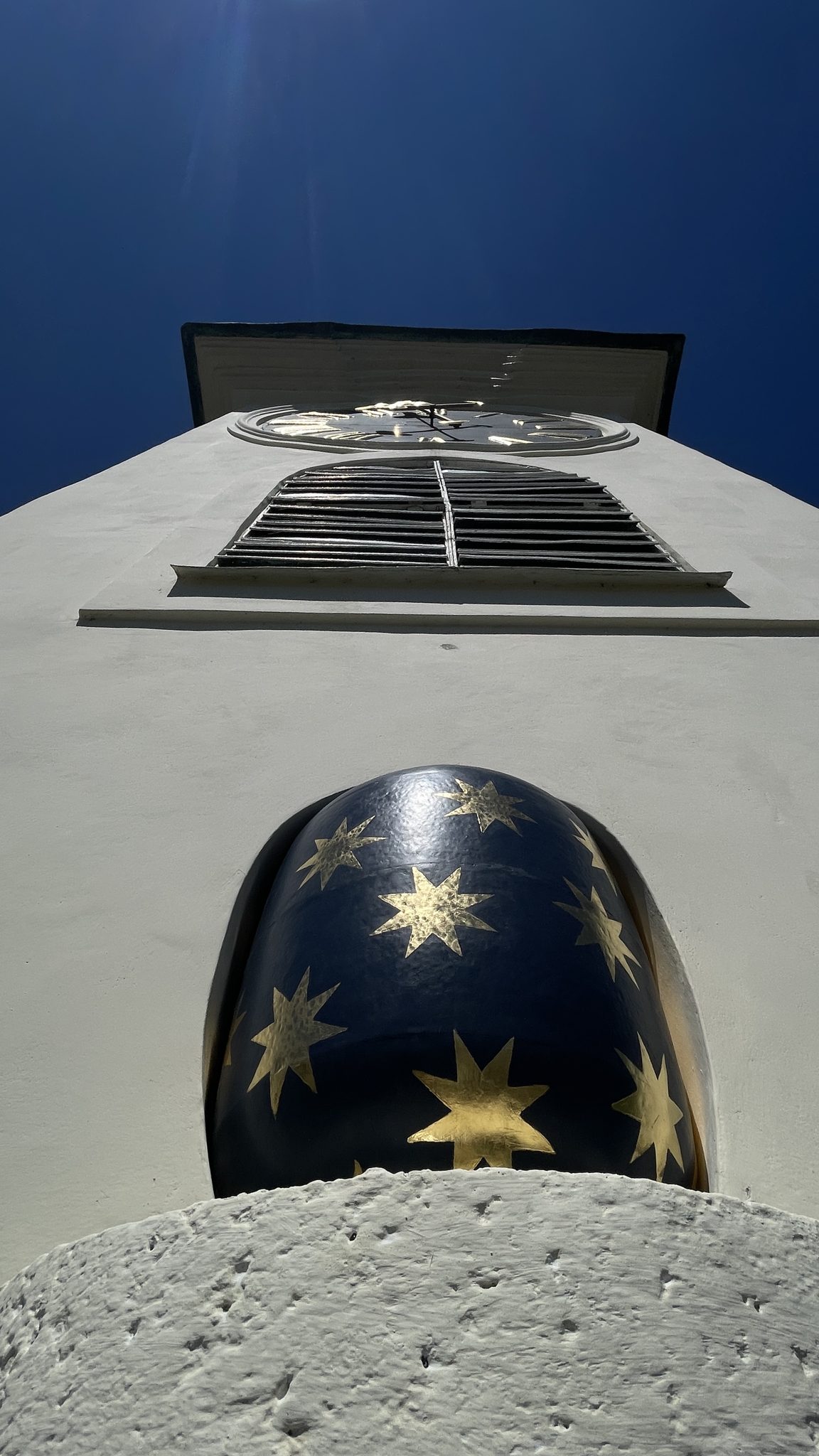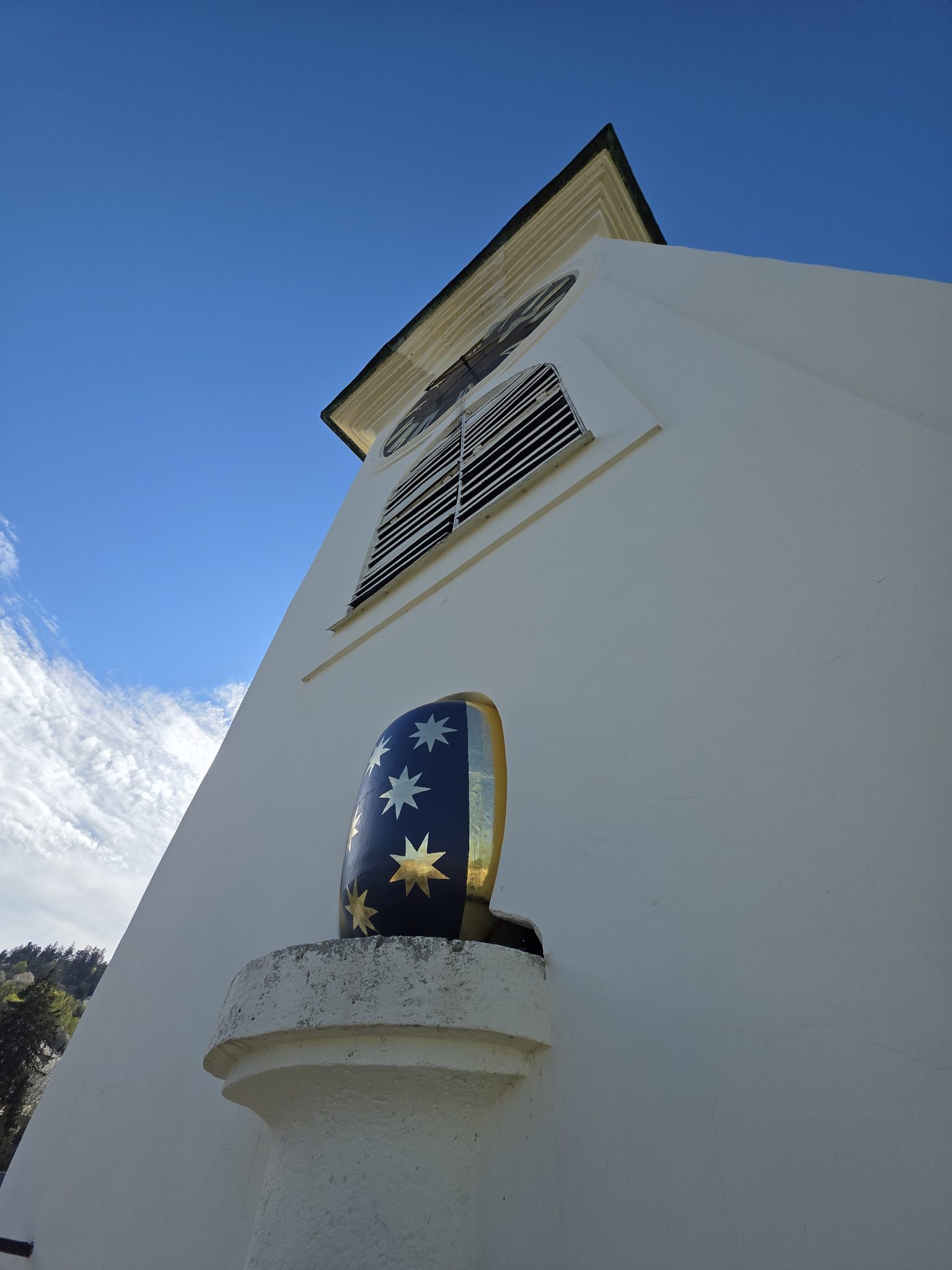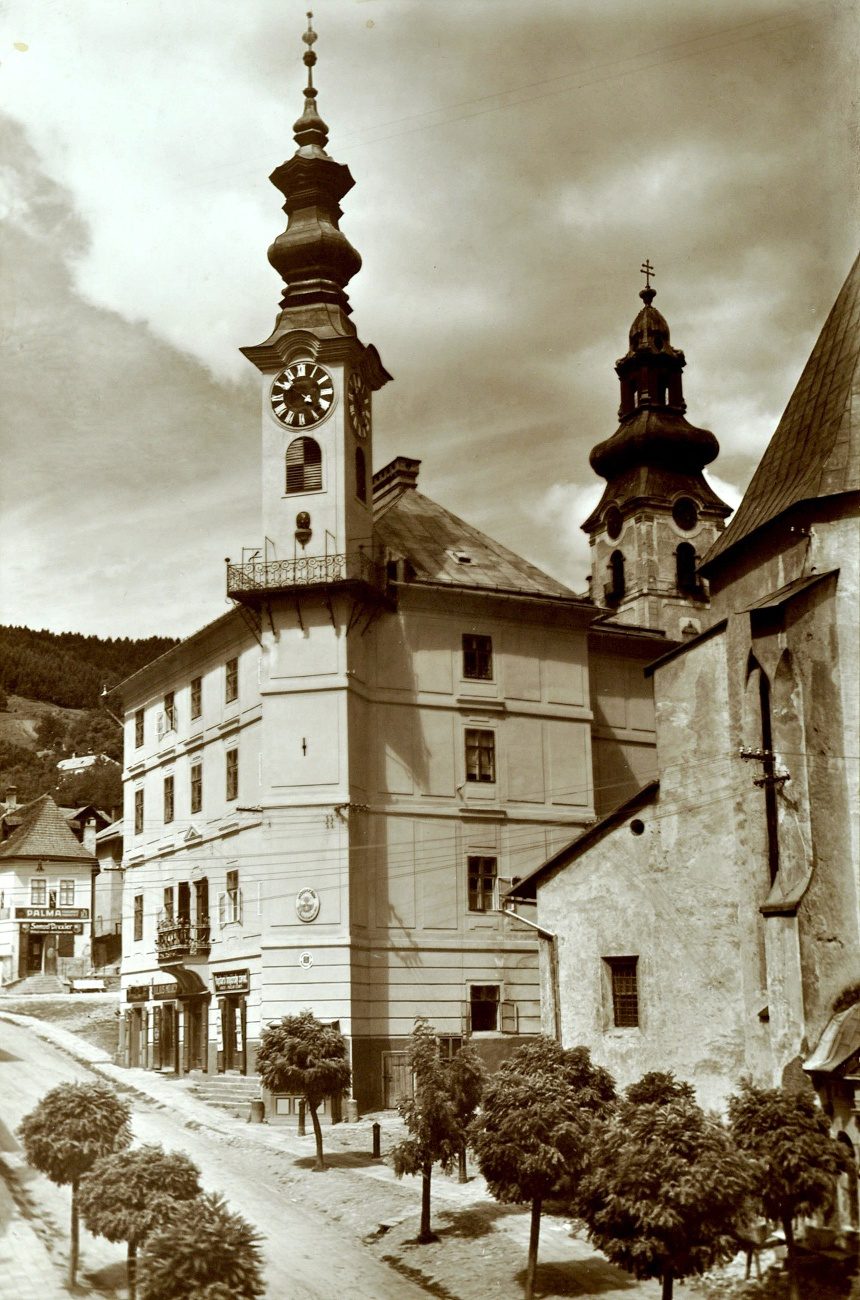


A working moon-phase indicator has returned to the Town Hall tower in Banská Štiavnica.
This rare 18th-century technical monument, removed from the tower in 2006, is back in its original place after many years as a faithful and fully functional replica. The restoration project was carried out by the Town of Banská Štiavnica in cooperation with DMO Región Banská Štiavnica, the area’s destination management organisation.
In the past, moon-phase indicators were among the most remarkable features of town towers, churches and astronomical clocks. They told townspeople the current phase of the Moon without anyone having to watch the night sky. The phases of the Moon mattered not only for drawing up calendars and setting the dates of church feasts, but also for farming and other economic activities.
A rarity matched only in Bratislava
The Banská Štiavnica moon-phase indicator is an exceptionally rare monument of its kind. The only other similar device to survive in Slovakia is on the town hall tower in Bratislava. It is thought to have been installed on the tower during one of the major rebuildings of the Town Hall in the 18th century.
‘Restoring the historic moon-phase indicator is a wonderful example of how we can save unique technical heritage and, at the same time, make it available to the public. I’m delighted that a feature which was part of the town’s identity for centuries is returning to its skyline. I believe this exceptional attraction will capture the interest of residents and visitors to Banská Štiavnica alike,’ said the Mayor of Banská Štiavnica.
Daniela Volenská, Chair of the regional destination management organisation, says that the project is an example of a responsible approach to protecting the region’s cultural heritage. ‘Banská Štiavnica has an extraordinary concentration of historic and technical monuments. Every project that helps preserve their authenticity while making the destination more attractive matters greatly to the whole region. I’m glad that another unique feature, almost unparalleled in Slovakia, has been restored.’
A replica true to the original
The replica itself was made by Obnova, s.r.o., under the direction of Michal Hrčka. The work called for a combination of historical research, fine craftsmanship and technical solutions, so that the result would match the original device as faithfully as possible.
‘Our aim was to create a replica that respects the historical value of the original while being fully functional. Restoring a device like this required careful study of the surviving parts, historical records and technical details. We’re pleased to have brought back to life a unique piece that will once again serve the public,’ said Michal Hrčka, managing director of Obnova, s.r.o.
The original moon-phase indicator is now part of the collections of the Slovak Mining Museum, which acquired it from the Town of Banská Štiavnica in 2015. In future it will be displayed in the exhibition of historical clocks at the Old Castle.
The project also included installing a copper information plaque with a QR code, through which visitors can find out more about the history, significance and workings of this unique device.
‘Restoring the moon-phase indicator is exactly the kind of project that links the protection of cultural heritage with the development of tourism. Today’s visitors are increasingly looking for authentic stories and the things that make a place unique. I’m convinced that this inconspicuous but extremely rare feature will also help visitors remember Banská Štiavnica as a town full of discoveries,’ added Dušan Káčer, Executive Director of DMO Región Banská Štiavnica.
The project was funded from several sources. The restoration was supported by DMO Región Banská Štiavnica, which contributed €16,168.84 from the membership contribution of the Banská Bystrica Self-Governing Region Development Agency. A further €1,796.54 came from the own funds of the investor, the Town of Banská Štiavnica.