




Močiar
A village where you’ll find plenty of picturesque views, greenery, heavenly peace and quiet, birdsong and a few smiling locals. If you’re tired of the hustle and bustle and would like to unwind, Močiar is just the place.
The first written mention of this foothill village dates back to 1305; it later belonged to Šášov Castle. In 1828, 401 people lived in 60 houses, making their living from farming and woodcutting; today there are only about 160. During the Slovak National Uprising there was heavy fighting in the village, and the 2nd Czechoslovak Parachute Brigade also took part. After the war, some of the villagers worked in agriculture and others in industrial plants in Žiar nad Hronom, Banská Štiavnica and Banská Belá.
A popular route with magnificent panoramic views runs through the village: Trnavá hora – Močiar – Jaseňová pažiť – Podhorie – Banská Štiavnica, used mainly by bikers. Near the village there are also primeval forests around Balov grúň, crossed by a forestry trail that follows the contour line.
Geologists know the village for its diatomite, a rock made up of the opaline shells of single-celled algae. Diatomite, too, was formed as a result of the volcanic activity of the Supervolcano Štiavnica. In the past it was put to some rather unfortunate uses: Alfred Nobel mixed it with highly explosive nitroglycerine and in 1867 patented the mixture as dynamite.

This Roman Catholic church, a single-nave Baroque and Classicist building with a presbytery, is the oldest monument in the village. Of particular interest are the three […]
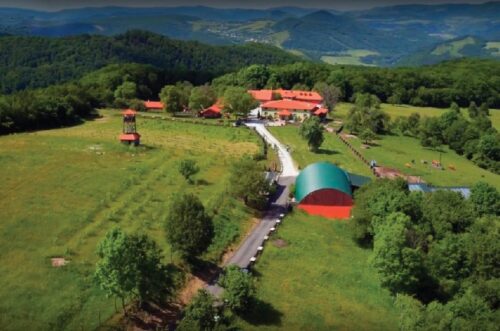
Farma Behanovo (750 m above sea level) is a family business that mainly makes herbal and fruit syrups, using fruit from its own orchards and herbs […]

The Štiavnica Mountains are home to as many as 5 remnants of original primeval forest. The best known are the forests around Bálov grúň, which lie […]